





Skilled Workers Can Still Secure Canadian Permanent Residence Without Local Work Experience: A Detailed Look at 2025 Opportunities
Despite Canada’s shifting immigration trends over the past year, skilled foreign workers continue to have strong opportunities to obtain permanent residence (PR) even without any prior experience working or living inside the country. With targeted immigration pathways now prioritizing specific occupations in high-demand sectors, qualified applicants abroad still stand an excellent chance of success.
This comprehensive report explores how international professionals can qualify for PR, which occupations are currently being prioritized, and the strategies that can significantly improve an applicant’s chances.
A Pathway to PR Without Canadian Experience
Canada continues to rely heavily on skilled foreign talent to support its evolving labour market. One of the most impactful changes has been the introduction and expansion of Category-Based Selection (CBS) draws under the Express Entry system.
These draws focus on candidates with specialized experience in fields facing urgent labour shortages.
For applicants outside Canada, this means eligibility is no longer dependent on having worked within the country before.
How Category-Based Draws Work
To qualify under a CBS draw, a candidate must have:
- At least six months of continuous, full-time (or equivalent part-time) work experience in the past three years
- Experience in a qualifying occupation
- Experience either inside or outside Canada
These draws often have lower CRS cut-off scores, making them more accessible for overseas candidates than traditional general draws.
Since early 2025, Immigration, Refugees and Citizenship Canada (IRCC) has primarily held category-based and program-specific draws, with no general draw taking place since April 2024.
In-Demand Occupations for 2025 Express Entry Categories
IRCC has identified five occupational categories that reflect sectors with urgent shortages. These are priority areas for Express Entry invitations.
Below is a sample of occupations currently in demand under each category:
1. Healthcare and Social Services
- Veterinarians
- Dentists
- Chiropractors
- General practitioners
- Registered and licensed practical nurses
- Social workers
- Dietitians and nutritionists
2. STEM (Science, Technology, Engineering and Mathematics)
- Cybersecurity specialists
- Civil engineers
- Electrical and electronics engineers
- Mechanical engineering technologists
- Architecture and science managers
- Geological engineers
- Insurance agents and brokers
3. Agriculture and Agri-Food
- Retail and wholesale butchers
4. Education
- Early childhood educators and assistants
- Elementary and secondary school teachers
- Kindergarten teachers
- Teacher assistants
- Instructors for persons with disabilities
5. Trades
- Roofers and shinglers
- Painters and decorators
- Floor covering installers
- Water well drillers
- Heavy-duty equipment mechanics
- Heating and refrigeration mechanics
- Oil and gas drilling contractors and supervisors
The categories above include many more eligible occupations beyond the examples listed.
What Applicants Should Do Next
Even if an occupation falls under a priority category, applicants must ensure that their work experience matches the requirements.
1. Confirm Your NOC Code Matches Your Job Duties
IRCC evaluates applications based on whether the duties performed align closely with the official National Occupational Classification (NOC).
Applicants must ensure they have performed most of the duties listed in the chosen NOC to avoid misrepresentation.
2. Review CRS Cut-Offs for Category-Based Draws
Understanding past CRS trends helps gauge competitiveness.
Here are the CRS ranges observed across programs in 2025 so far:
- French-language proficiency: 379–481
- Canadian Experience Class: 518–547
- Provincial Nominee Program: 699–855
- Healthcare and social services: 462–510
- Education: 462–479
- Trades: 505
Not all categories see frequent draws; for instance, STEM and Agriculture saw no draws in early 2025.
3. Gain the Required Work Experience Abroad
For those who do not yet meet the six-month requirement, gaining experience abroad in an eligible occupation can open the door to Express Entry.
4. Stay Informed About Upcoming Changes for 2026
Canada may introduce additional priority categories in 2026, such as:
- Leadership and management roles
- Academia and research
- Military occupations
This means new opportunities may emerge for a wider range of professionals.
Other PR Pathways Without Canadian Work Experience
While Express Entry is the most prominent route, additional options exist for those outside Canada:
French-Language Skills
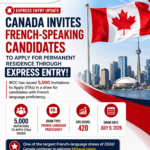
Candidates with strong French ability often receive invitations through French-language draws, which tend to have the lowest CRS thresholds.
Provincial Nominee Programs (PNPs)
Certain provinces nominate skilled workers directly from abroad through enhanced PNP streams, granting an additional 600 CRS points and virtually guaranteeing an invitation.
Job Offers Leading to PR Programs
Programs such as the Atlantic Immigration Program (AIP) allow foreign workers with job offers in Atlantic provinces to apply directly for PR, even without Canadian experience.
Conclusion
Canada’s immigration landscape continues to evolve, but opportunities remain strong for skilled foreign workers seeking permanent residence without prior Canadian work experience. Through category-based draws, PNP pathways, and targeted programs like the AIP, many professionals can still build a successful path toward living and working in Canada.
For a consultation about Immigration options, reach out to the CAD IMMIGRATION today!
