





Moving to Canada from the U.S.: your main work-permit routes explained
Canada remains a top destination for Americans thinking about relocating. If you want to live and work in Canada, there are several legal pathways available — from streamlined trade agreements and employer-specific programs to tech-fast tracks and routes that lead to permanent residence. This report walks through the practical options for U.S. citizens, the benefits and limitations of each route, and concrete steps to speed up your move.
1. Temporary stay as a digital nomad or business visitor: short-term options without a work permit (in limited cases)
If you plan to work remotely for a U.S. employer or clients based outside Canada while physically staying in Canada for a short period, you may be able to do so as a visitor or “digital nomad” without a Canadian work permit. Canada typically admits visitors for up to six months (or to the date stamped on your passport), and business visitors performing limited activities that do not displace Canadian labour generally do not need work authorization.
Key limitations and cautions
- You cannot enter the Canadian labour market or provide services to Canadian clients without the appropriate work permit.
- Engaging in activities that look like employment for a Canadian entity, even informally, may require a permit and could put your status at risk.
- Always be clear about who pays you and where the income originates; cross-border tax and employment rules can be complex.
2. CUSMA (formerly NAFTA) — a fast, employer-based route for many Americans
U.S. citizens benefit from the Canada–United States–Mexico Agreement (CUSMA), which preserves simplified access for certain categories of temporary workers. CUSMA work permits are often faster and do not require a Labour Market Impact Assessment (LMIA), which makes them a preferred option for many professionals and intra-company transferees.
Common CUSMA categories
- Professionals: Occupations listed under the agreement (engineers, accountants, designers, some IT roles, and more) with the required education or licensing.
- Intra-company transferees: Employees of U.S. companies transferred to a Canadian branch or affiliate for managerial, executive, or specialized-knowledge roles (usually after at least one year with the employer).
- Investors and business persons: Individuals coming to develop or direct an enterprise in Canada, typically in an executive or supervisory capacity.
Advantages
- No LMIA required.
- U.S. citizens can often apply at a Canadian port of entry or from abroad, making processing quicker.
- Work permits under CUSMA are typically issued for a defined period (often up to three years) and can be renewed.
3. Temporary Foreign Worker Program (TFWP) — employer-driven, LMIA-based permits
If CUSMA does not apply, many U.S. applicants use the Temporary Foreign Worker Program. Under the TFWP an employer must generally obtain a positive LMIA demonstrating that no Canadian or permanent resident is available for the role.
Things to know
- Closed work permit: A TFWP permit is usually tied to a specific employer and position. Changing jobs typically requires a new LMIA and permit.
- High-wage vs. low-wage streams: The employer’s recruitment and compliance obligations differ based on whether the offered wage meets provincial median thresholds. These thresholds vary by province and are used to determine program requirements.
- Processing time: Because an LMIA is involved, this route often takes longer than CUSMA or LMIA-exempt streams.
4. Global Talent Stream (GTS) — a fast lane for highly skilled workers and tech talent
The Global Talent Stream is a specialized, expedited track of the TFWP that helps Canadian employers bring in highly skilled workers in priority occupations — frequently technology-focused roles. The program promises rapid LMIA processing (often within 10 business days) and prioritised work-permit applications.
Why GTS is attractive
- Employers with approved GTS access can fast-track the LMIA and work-permit process.
- Processing times for the overall route can be measured in weeks rather than months.
- This stream is ideal for in-demand IT roles, advanced engineering positions, and other specially designated occupations.
5. International Experience and working-holiday style stays
For younger Americans from countries that participate in Canada’s International Experience arrangements, the program provides temporary open work permits under categories such as Working Holiday, Young Professionals, or International Co-op. Note that the United States does not have a working-holiday reciprocal arrangement with Canada; U.S. citizens generally use CUSMA, TFWP, or other routes instead.
6. Routes that lead to permanent residence (PR)
Many Americans who plan to move permanently look for paths that begin with a work permit and end in PR. Common PR routes include:
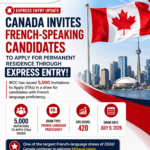
- Express Entry: Canada’s main economic immigration system for skilled workers. It manages several federal programs, ranks candidates with a points-based CRS, and issues Invitations to Apply to top-ranked profiles. Canadian work experience helps, but other factors such as age, education and language matter greatly.
- Provincial Nominee Programs (PNPs): Provinces nominate workers to meet local labour-market needs. Many PNP streams give priority to applicants with a qualifying job offer or to those performing in-demand occupations. Some PNPs align with Express Entry to speed up PR processing.
- Family sponsorship: If you have qualifying relatives who are Canadian citizens or permanent residents, you may be sponsored for PR under family reunification rules.
- Study-to-PR pathway: Studying at a Canadian designated learning institution can lead to a Post-Graduation Work Permit; Canadian credentials and Canadian work experience can substantially raise your CRS score under Express Entry.
7. Special pathways and practical tips for Americans
- Employer engagement: Securing a Canadian job offer from a compliant, experienced employer is often the most straightforward route to a work permit that converts into PR.
- Assess your NOC fit: Make sure the job’s National Occupational Classification (NOC) code matches the role and your experience — this matters for work-permit categories and PR eligibility.
- Consider intra-company transfers: If you work for a multinational U.S. company with Canadian operations, a transfer may be the fastest path.
- Plan for taxes and healthcare: Working in Canada triggers Canadian tax obligations and — depending on the province — eligibility for public health coverage. Review cross-border tax treaties and provincial health rules before you move.
- Seek professional advice when needed: Immigration rules are complex and change frequently; consulting an immigration lawyer or regulated consultant can reduce errors and speed processing.
Quick comparison table (at a glance)
- Short-term remote stay / business visitor: No permit for limited stays, but cannot work for Canadian employers.
- CUSMA: Fast, LMIA-exempt for many professionals and transferees — ideal for Americans.
- TFWP (LMIA): Employer-led, may be slower, ties you to one employer.
- Global Talent Stream: Fast for tech and priority occupations; employer must qualify.
- Express Entry / PNP: Routes to PR; may begin with eligible work permits or a qualifying job offer.
- Study / PGWP: Study first, then work and use Canadian experience to pursue PR.
Final word
Moving to Canada as an American is highly feasible and often faster than applicants expect, especially when you use agreement-based options like CUSMA or employer-led programs such as the Global Talent Stream. Your ideal route depends on your occupation, employer situation, long-term goals and whether you want to pursue permanent residence. Preparing documents, understanding employer obligations, and aligning your job duties to Canadian occupational classifications will smooth the way.
For a consultation about Immigration options, reach out to the CAD IMMIGRATION today!
