





French at NCLC 5 opens doors: permanent-residence pathways for intermediate French speakers
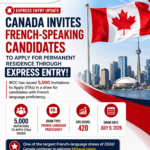
Canada’s push to grow Francophone immigration outside Quebec is creating meaningful new opportunities for candidates with intermediate French ability (NCLC level 5). While Express Entry’s French-language draws typically require a higher NCLC 7, a level-5 score still offers multiple reliable routes to permanent residence (PR) — especially for applicants willing to target community-led programs, student-to-PR pilots, and territorial streams.
This article explains the most practical PR pathways available to NCLC 5 speakers, who they target, and the steps applicants should take now to maximise their chances.
Why NCLC 5 matters now
The federal government has set an ambition to increase Francophone immigration outside Quebec to roughly 10.5% of PR admissions by 2028 (up from 8.5% in 2025). To reach that goal, provinces and communities are experimenting with employer-led streams, student pipelines, and territorial nominations that accept NCLC 5. For many applicants, reaching NCLC 5 is an achievable language milestone that unlocks targeted, lower-barrier pathways — without needing the advanced French scores Express Entry’s French draws demand.
Key PR pathways for NCLC 5 French speakers
1. Francophone Community Immigration Pilot (FCIP) — work- and employer-driven PR outside Quebec
What it is: A community-led program that connects French-speaking skilled workers to designated employers in participating communities outside Quebec.
Who it targets: Skilled workers with NCLC 5 across all four abilities and a valid job offer from a designated employer. Many designated roles correspond to the community’s priority sectors.
Core eligibility highlights:
- NCLC 5 in listening, speaking, reading and writing.
- A Canadian secondary or post-secondary credential (or equivalent).
- One year of related work experience in the last three years (some student exemptions apply).
- Sufficient settlement funds (varies by family size and community).
How it works: Employers nominate and forward candidate files to the community for recommendation; recommended candidates then apply to IRCC for PR. Participating communities include several hubs in Ontario, New Brunswick, Manitoba and British Columbia.
2. Francophone Minority Communities Student Pilot (FMCSP) — study-to-PR route for eligible nationals
What it is: A student-to-PR pilot for French-speaking international students who attend eligible French-language or bilingual programs outside Quebec.
Who it targets: Applicants from eligible countries who can demonstrate NCLC 5 across all four abilities and who gain admission to a participating designated learning institution (DLI).
Core eligibility highlights:
- LOA from a participating campus and program where more than half the instruction is in French.
- Must apply from outside Canada and demonstrate sufficient funds for tuition and living costs.
- No job offer required to transition to PR after graduation under the pilot’s rules.
Why it’s useful: This route is especially attractive for students who want to study in French, build local networks, and convert a Canadian credential into a PR application without the higher NCLC thresholds required by some federal French draws.
3. Northwest Territories Nominee Program — Francophone Stream (NTNP)
What it is: A territorial nomination stream aimed at bilingual candidates who can serve the NWT’s public-service and community needs.
Who it targets: Candidates with NCLC 5 (French) and CLB 4 (English), a permanent full-time job offer in the Northwest Territories, and relevant local or external work experience.
Core eligibility highlights:
- NCLC 5 and CLB 4 in a single test session.
- Job offer from an NWT employer and intent to live in the territory.
- Education and work-experience requirements (six months of NWT work or one year elsewhere).
- Proof of settlement funds and employer verification processes.
How it differs: The NWT stream is region-specific, never requires entry to an EOI pool, and emphasises a genuine intention to settle in the territory.
Practical steps applicants should take now
- Lock in your NCLC 5 test results — ensure all four abilities meet NCLC 5 in a single test session; keep official test records ready for applications.
- Target communities and employers — identify FCIP designated employers and FMCSP DLIs whose priorities match your skills. Tailor applications to community priorities.
- Gather credential evidence — obtain Educational Credential Assessments or certified translations for foreign diplomas and transcripts.
- Build or confirm a job offer — many FCIP and NTNP routes require a designated-employer job offer; confirm duties, hours, and salary expectations that meet provincial/territorial guidelines.
- Prepare settlement funds and documentation — calculate required funds based on family size and community cost of living; gather police certificates, ID, and employment references.
- Consider pathway sequencing — a student-to-PR route may be strategically effective (FMCSP) if you lack a job offer but can secure admission to an eligible program.
- Monitor changes and deadlines — community priorities and eligible employers can change; stay updated with participating communities and program announcements.
Who should consider each pathway?
- FCIP: Skilled French speakers with work experience and the ability to secure a designated-employer job offer — ideal for those ready to move to a participating community.
- FMCSP: Prospective students from eligible countries who want a study-to-PR path in French without the need for a prior job offer.
- NTNP Francophone Stream: Bilingual applicants with a job offer for the Northwest Territories who are willing to settle and work in a regional context.
Bottom line
Reaching NCLC level 5 in French opens realistic and strategic routes to permanent residence outside Quebec. While it sits below the advanced French thresholds used for Express Entry French-language draws, NCLC 5 is highly relevant to community-led programs, student-to-PR pilots, and territorial streams that actively seek to build Francophone capacity across Canada. Candidates who combine NCLC 5 with a targeted job offer, a recognized Canadian credential, or an eligible student program position themselves strongly for PR through these tailored pathways.
For a consultation about Immigration options, reach out to the CAD IMMIGRATION today!
