





Canada’s Immigration Priorities for 2026: Who Stands the Best Chance
As Canada moves toward 2026, clear policy signals from Immigration, Refugees and Citizenship Canada (IRCC) reveal which types of candidates are likely to be prioritized under the country’s economic immigration system.
Throughout 2025, the federal government introduced new immigration categories, expanded existing pathways, and adjusted draw patterns under Express Entry and Provincial Nominee Programs. Together, these developments point to a continued focus on candidates who can immediately support Canada’s labour market, public services, and innovation-driven economy.
While no immigration draw can be predicted with certainty, recent trends offer strong insight into the profiles IRCC is likely to favor in 2026.
Candidates Already Working in Canada
One of the strongest trends in 2025 has been IRCC’s preference for applicants with Canadian work experience.
The Canadian Experience Class (CEC) emerged as one of the most frequently used Express Entry programs, issuing tens of thousands of invitations during the year. This reflects the government’s broader objective of transitioning temporary residents—especially workers—into permanent residents.
Canada’s Immigration Levels Plan further supports this approach, with plans to fast-track tens of thousands of temporary foreign workers to permanent residence between 2026 and 2027. These individuals are already contributing to the economy, paying taxes, and integrating into Canadian communities.
As a result, foreign nationals who are living and working in Canada are expected to remain highly competitive for permanent residence next year.
Healthcare and Social Service Professionals
Healthcare and social services continue to face nationwide labour shortages, making professionals in these fields a long-term immigration priority.
In 2025, IRCC expanded its healthcare-focused category to include social service occupations, broadening eligibility beyond traditional medical roles. Healthcare-related draws issued a significant number of invitations, making this category one of the most actively selected under category-based Express Entry draws.
Provinces have also reinforced this demand through dedicated provincial nomination streams for healthcare workers. Several provinces have already confirmed plans to continue prioritizing healthcare and social service professionals in 2026.
Additional federal measures, such as reserved nomination spaces for doctors and faster work permit processing for provincially nominated physicians, further underline the importance of this sector.
Physicians with Canadian Work Experience
A major development late in 2025 was the creation of a dedicated Express Entry category for physicians with recent Canadian work experience.
This category targets doctors who have completed at least one year of eligible work experience in Canada within the last three years. Historically, category-based draws have featured lower CRS cut-offs, making this pathway especially valuable for internationally trained physicians who might otherwise struggle to compete in general draws.
IRCC has confirmed that invitations under this category are expected to begin in early 2026, signaling strong future demand for medical professionals already working in Canada.
French-Speaking Immigration Candidates
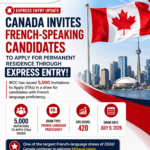
Francophone candidates remain one of the most consistently prioritized groups under Canada’s immigration system.
In 2025, French-language proficiency draws issued the highest number of invitations compared to any other draw type. These draws often featured lower CRS thresholds and large invitation volumes.
Canada’s Immigration Levels Plan reinforces this trend, with increased targets for Francophone immigration outside Quebec in 2026. Strengthening Francophone minority communities has been identified as both an economic and demographic priority.
Based on draw patterns and long-term planning, French-speaking candidates are expected to remain among the most competitive profiles for Express Entry selection in 2026.
Skilled Trades Workers
Skilled trades professionals continue to be in high demand due to ongoing shortages in construction, infrastructure, and skilled manual labor sectors.
In 2025, IRCC expanded the Trades category to include additional occupations, reflecting persistent workforce gaps. Federal announcements also highlighted plans to admit thousands of construction workers to support housing and infrastructure development.
Provinces have consistently used targeted draws and nomination streams to attract trades workers, and public consultations for 2026 confirmed trades as a long-term priority sector for economic stability and growth.
These signals strongly suggest that skilled trades workers will remain a key focus of immigration programs in 2026.
International Researchers and High-Tech Talent
Canada has also intensified efforts to attract global talent in research, technology, and advanced industries.
In 2025, the federal government announced major initiatives aimed at recruiting international researchers and highly skilled professionals in fields critical to innovation and competitiveness. These initiatives include new accelerated pathways and substantial investment in research-focused immigration streams.
Priority areas identified include advanced digital technologies, health and biotechnology, clean energy, climate resilience, food security, advanced manufacturing, and defense-related technologies.
Although these initiatives may not directly lead to permanent residence, participants are expected to gain Canadian work experience that can later support eligibility for PR through existing immigration programs.
What This Means for 2026 Applicants
The direction is clear: Canada’s immigration system is increasingly focused on candidates who can address labour shortages, strengthen public services, and contribute to innovation-driven growth.
Applicants who align with these priorities—especially those with Canadian experience, healthcare or trades backgrounds, French language skills, or research and tech expertise—are likely to see stronger opportunities in the year ahead.
For a consultation about Immigration options, reach out to the CAD IMMIGRATION today!
